
The Daydreamer Who Was “Doing Fine”
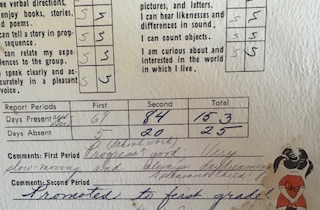
I found my kindergarten report card the other day. I smiled when I read my teacher’s comment:
Progress (student work) good, very slow-moving, and always daydreaming. A pleasant child!
Looking back, it’s easy to spot the signs of my type of ADHD—Inattentive ADHD (formerly called ADD). Students with this type are often overlooked. They don’t disrupt the classroom or cause problems at home. They’re the daydreamers. The ones who miss part of the directions and ask questions that the teacher just answered.
When You’re Both Gifted and Struggling
Living with Inattentive ADHD is hard—and it becomes even more complex when you’re also gifted.
If identified early, you might be described as twice exceptional (2e), meaning you have both strong abilities and real challenges. You may excel at problem-solving, pattern recognition, or creative thinking, while still struggling with organization, planning, time management, prioritization, or managing emotions such as anxiety and frustration.
Strengths Can Hide Struggles — and Struggles Can Hide Strengths
Sometimes strengths hide struggles.
Sometimes struggles hide strengths.
The Messages Many of Us Grew Up With
As a child, I often heard:
• “You’re not living up to your potential.”
• “You’re smart, but lazy.”
• “You’re always daydreaming.”
• “You never finish anything you start.”
• “I already answered that question.”
It Was Never About Intelligence — and It Was Never Laziness
I wasn’t diagnosed until middle age. Once I learned about Inattentive ADHD, my whole life began to make sense.
Teachers couldn’t understand why I grasped complex ideas but made simple mistakes. I carried intense anxiety and frustration when I made mistakes. I knew the material, but my brain didn’t always cooperate in predictable ways.
None of this was a lack of intelligence.
And it certainly wasn’t laziness.
Why Twice-Exceptional Learners Are So Often Missed
Twice exceptional students are often overlooked because their giftedness makes them appear capable, while their ADHD challenges are misread as a lack of effort or motivation. Without support, this can lead to anxiety, self-doubt, and underachievement.
Understanding Your Brain Changes the Story
If this felt familiar, you’re not alone—and there is nothing “wrong” with you. Understanding your brain is often the first step toward learning how to support it.
