Why do some memories stick and others disappear?
I was five years old, asleep in my flannel Holly Hobbie nightgown, when I woke up to blaring sirens.
My parents rushed into my room. The walls were glowing with a strange light.
My school was on fire.
I don’t remember what I did last weekend.
But I remember that night from 50 years ago.
Our brains are wired this way for a reason.
Memory strengthens when information is connected to emotion or something we already know.
We can use that on purpose.
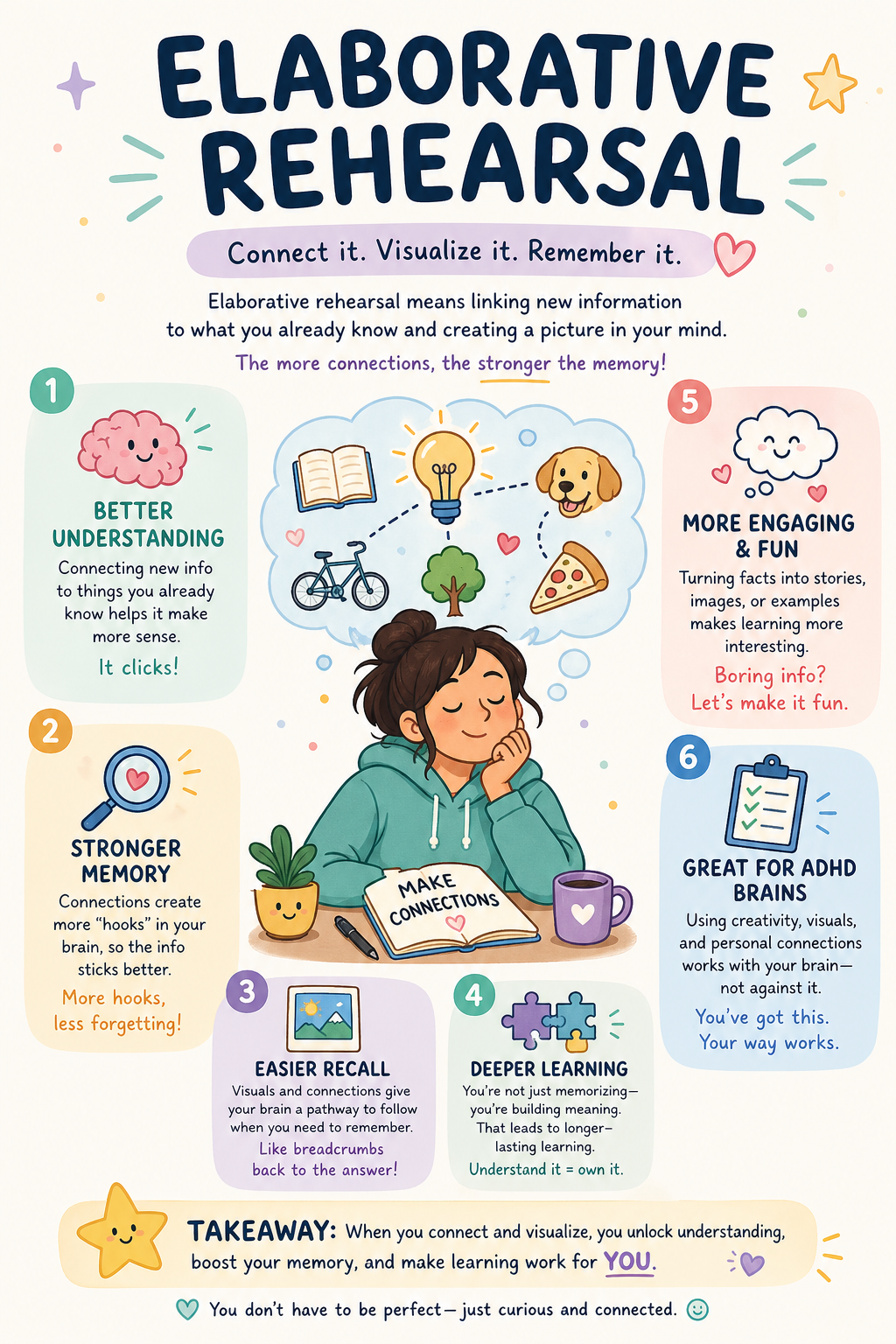
What is elaborative rehearsal?
Elaborative rehearsal is a way to make information stick by:
- connecting it to what you already know.
- adding meaningful details.
- putting it into your own words.
Instead of repeating information, you build meaning around it.
Example:
Let’s say you want to remember:
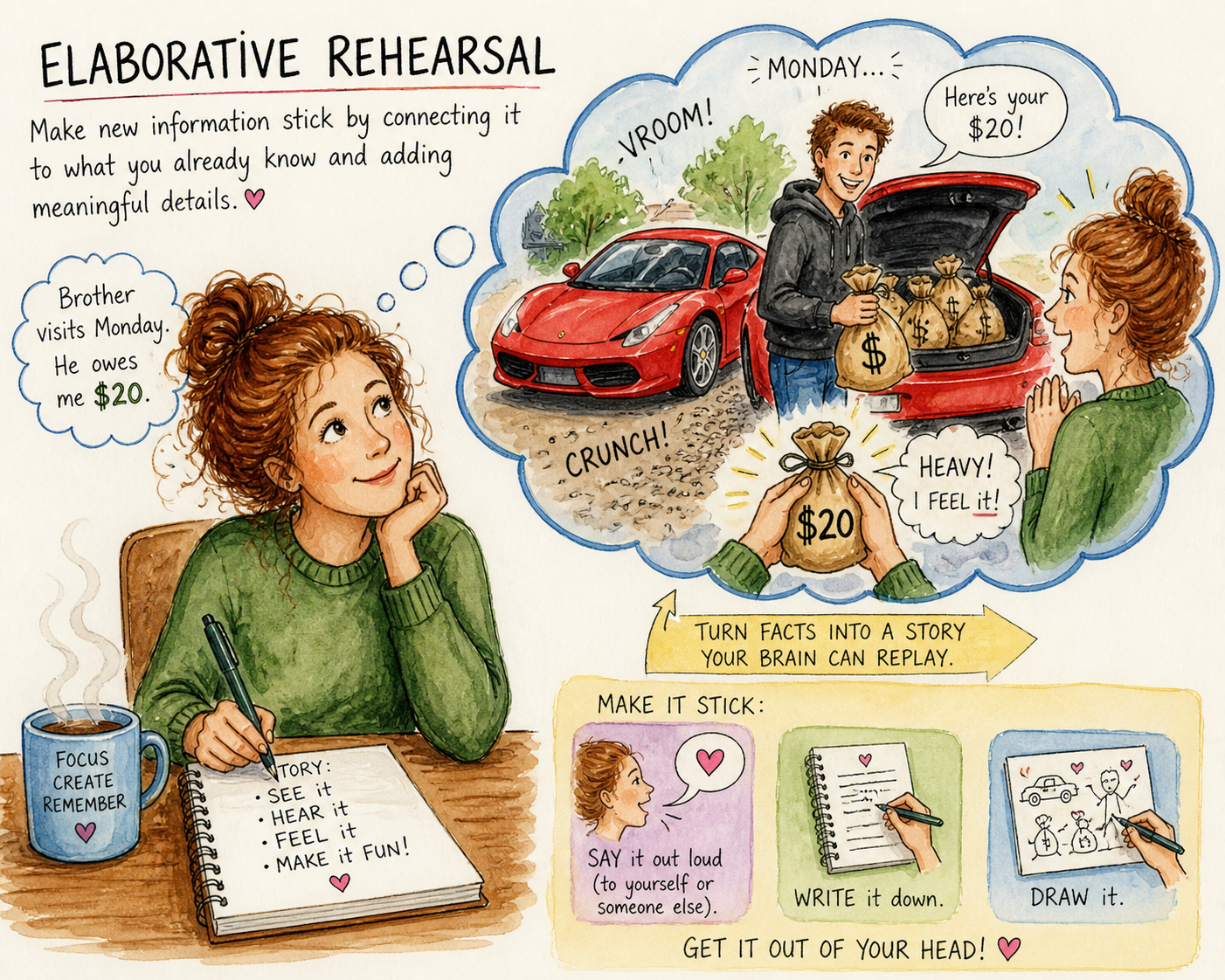
Your brother is visiting Monday, and he owes you $20.
You could repeat it…
or you could turn it into something your brain can replay.
Picture this:
Your brother pulls into the driveway on Monday in a bright red Ferrari.
You hear the engine. The crunch of gravel.
He steps out and opens the trunk.
Inside: 20 heavy bags of gold.
He hands them to you one by one.
You feel the weight. The rough texture of the bags.
Now it’s no longer just “Monday, $20.”
It’s a scene.
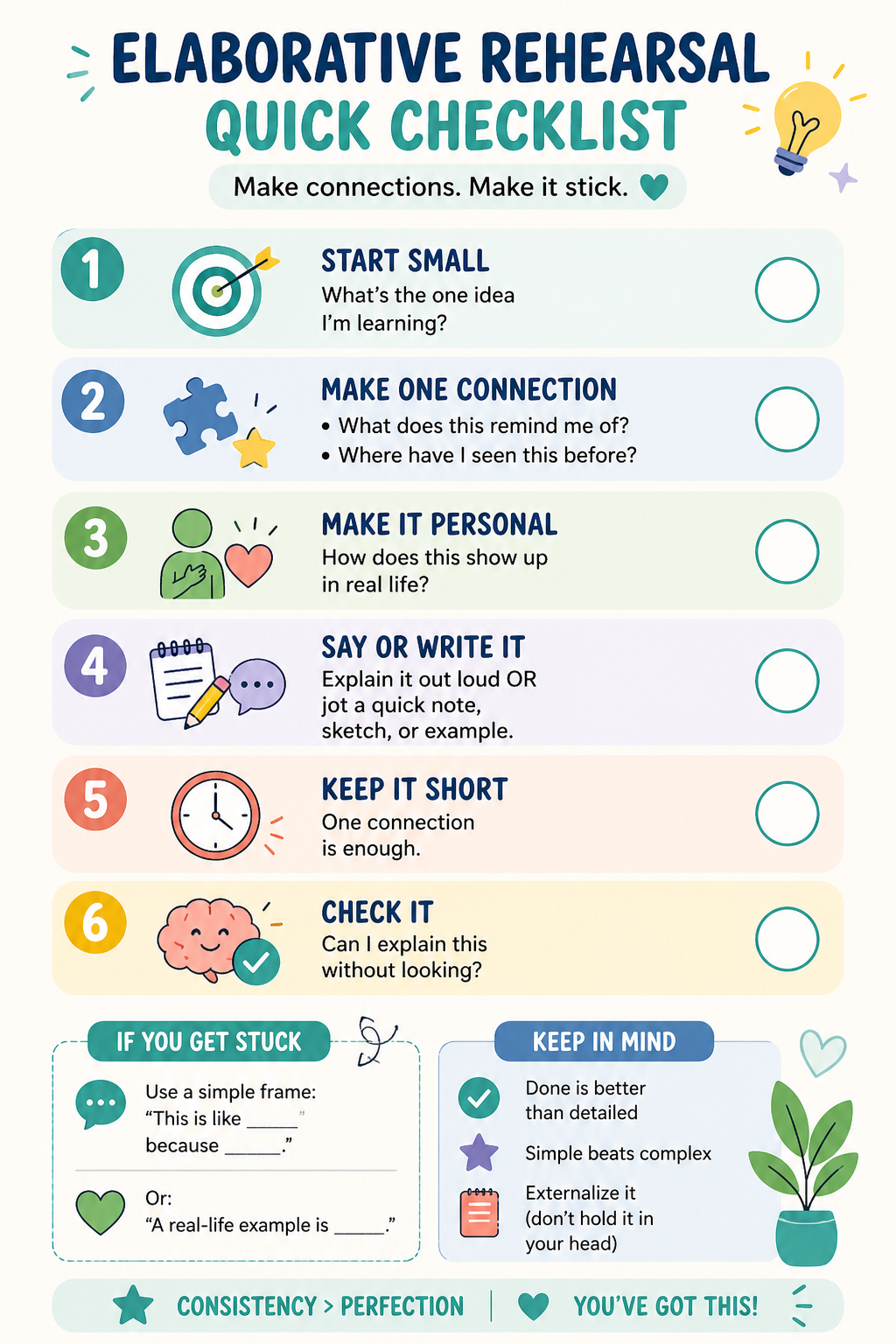
How to do this:
- Take a small piece of information.
- Connect it to something familiar.
- Add sensory details (sound, sight, touch, etc.).
- Make it a little exaggerated or unusual.
If it feels a bit ridiculous, you’re doing it right.
Make it work for your brain:
This doesn’t have to be visual.
- If you don’t think in pictures, focus on sound or movement.
- If you like logic, explain it to yourself in your own words.
- If you enjoy humor, make it absurd.
The goal is simple: make it meaningful enough to stick
Make it stick even more (externalize it):
You can strengthen this even further by getting it out of your head.
After you build your mental scene, try one of these:
- Say it out loud (to yourself or someone else).
- Write a quick version of the story.
- Sketch or doodle what you imagined.
This gives your brain another way to process and store the information.
You’re not just thinking it—you’re expressing it.
Try it:
Start small.
Take one fact from your day and build a quick mental scene around it.
That’s it.
You don’t need to do this all day—just practice once or twice.
Final note
Strong emotion naturally strengthens memory.
Elaborative rehearsal lets you create that strength on purpose—without needing a crisis to remember something.